
6 min
The Euro Is Here: Why 2026 Is the “Moment of Truth” for Bulgarian Real Estate
What really happened to property prices after Bulgaria adopted the euro? And what does it mean for buyers, sellers, and investors in 2026?
Published
February 20, 2026
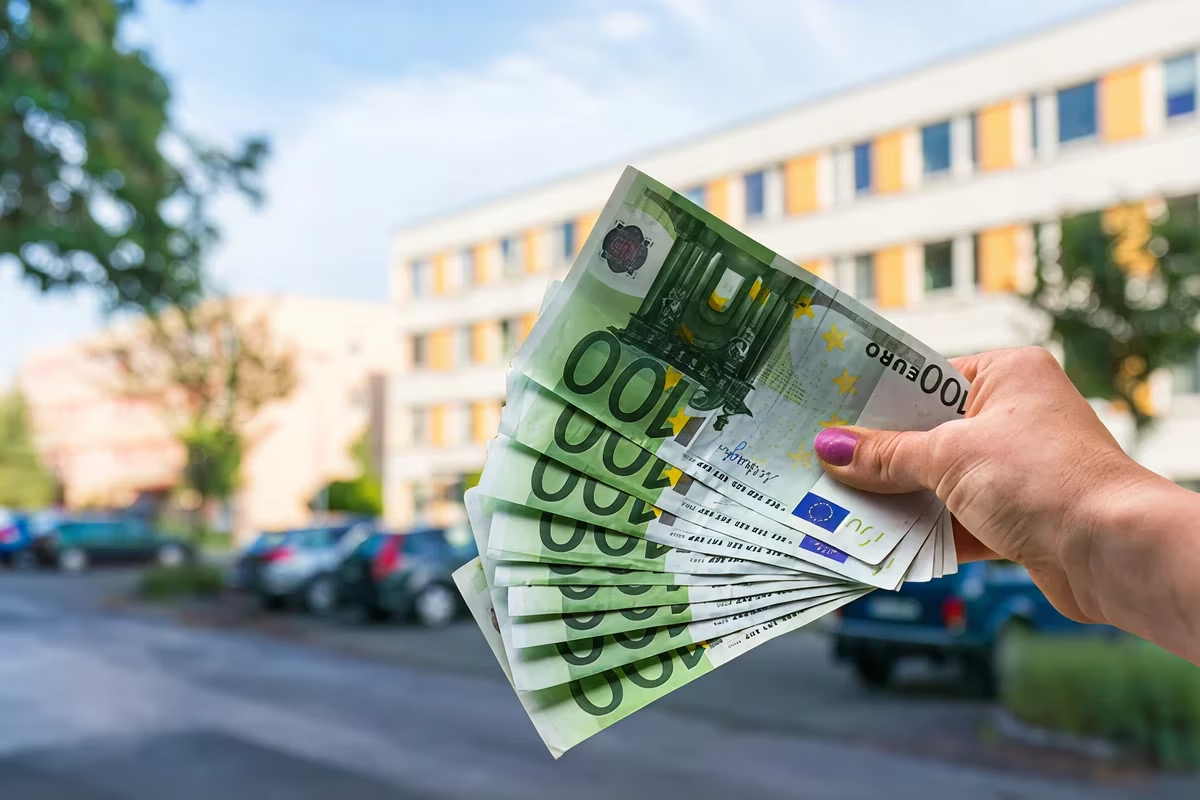
For years, the conversation around Bulgaria’s euro adoption sounded dramatic:
- “Prices will double overnight.”
- “The market will crash.”
- “Your savings will disappear.”
Now it’s March 2026. The euro is officially Bulgaria’s currency. The rumors are over. What remains is reality, and data.
At FairMarket.bg, we analyze real listings across the Bulgarian market daily. Here’s what is actually happening and why 2026 is shaping up to be the most important turning point in modern Bulgarian real estate.
The End of the “Guesswork” Era in Bulgarian Real Estate
For decades, buying property in Bulgaria often felt unclear:
- The same apartment listed 5 times on different websites
- Prices adjusted quietly without explanation
- Difficult comparisons between Sofia, Bucharest, or Berlin
- Currency risk influencing investor decisions
With euro adoption, that uncertainty is disappearing.
By removing currency volatility, Bulgaria has officially entered the European real estate mainstream. Transactions, valuations, and mortgages are now aligned with eurozone standards.
This is not just a currency change. It’s a structural upgrade of the market.
What Happened to Property Prices After the Euro?
Let’s separate fear from facts.
Late 2025: The “Parking Money” Effect
In the final months before euro adoption, we observed speculative demand. Many households moved savings into property to hedge against uncertainty.
FairMarket data showed temporary price growth between 15% and 18% in some segments, especially in:
- Southern districts of Sofia such as Sofia
- High-demand neighborhoods like Krastova Vada
- Residential zones such as Lozen
This was not structural growth. It was emotional buying.
2026: The Market Matures
After January 2026, something important happened:
The panic stopped. Instead of aggressive price spikes, we are now seeing:
- Stabilization in asking prices
- Longer listing cycles (healthier negotiation dynamics)
- Strong demand for high-quality, energy-efficient new builds
- Reduced speculative flipping
Analysts forecast sustainable annual growth between 6% and 10% for 2026, indicating a more mature, predictable market.
This is what a stable economy looks like.
Why the Euro Changes Everything for Buyers
1. True Price Comparability Across Europe
Before 2026, comparing a 120 m² apartment in Sofia to one in Berlin required mental currency conversion and exchange-rate risk calculations.
Now? You compare euro to euro.
For the first time, Bulgarian buyers can benchmark property prices directly against:
- Germany
- Austria
- Romania
- Spain
Transparency is no longer optional, it is standard.
2. Mortgage Stability
With Bulgarian banks operating fully within the euro framework and aligned with the European Central Bank structure, lending conditions are becoming more predictable.
This means:
- Less currency risk in loan servicing
- Greater long-term planning stability
- Improved investor confidence
For families, predictability matters more than short-term speculation.
Why Sellers Benefit from Euro Adoption
Access to Eurozone Capital
Previously, many European investors hesitated due to:
- Exchange rate volatility
- Conversion risk
- Administrative complexity
Now, Bulgarian real estate is priced in the same currency used across the eurozone. Your property is no longer “emerging market exposure.” It is euro-denominated European real estate. That distinction matters.
The Real Risk in 2026: Misinformation
The euro did not create instability. But transitions often attract noise. We’ve already observed:
- “Ghost listings” targeting foreign investors
- Artificial price inflation labeled as “Euro adjustment”
- Duplicate offers across platforms
In today’s environment, the biggest threat isn’t the currency, it’s bad data.
3 Reasons FairMarket Is Your “Eurozone Shield”
In a euro-denominated market, every cent counts. Transparency is no longer optional.
Here is how FairMarket protects buyers and sellers:
1. Verified Historical Price Tracking
We provide historical price paths so users can see:
- How a property was priced before euro adoption
- Whether adjustments are market-driven or speculative
- How listings evolve over time
No hidden “Euro tax.”
Just data.
2. Duplicate & Fake Listing Detection
Our system aggregates listings across multiple platforms and removes duplicates, so you don’t see:
- The same apartment listed 5 times
- Artificial demand signals
- Misleading pricing differences
One property. One real price. One clear view.
3. Market-Level Insights, Not Rumors
Instead of headlines, we analyze:
- Real listing volumes
- Time-on-market trends
- District-level demand
- New construction supply dynamics
In a maturing market, clarity wins.
Is 2026 a Good Time to Buy Property in Bulgaria?
The short answer:
If you’re waiting for a crash driven by euro adoption — it’s unlikely.
The euro did not make housing unaffordable.
It made the market more disciplined.
What we are seeing instead:
- Healthier negotiation margins
- More rational pricing
- Increased foreign investor interest
- Gradual alignment with European standards
Stability attracts capital. Capital supports property values.
The Bigger Picture: Standard of Living & Economic Signal
Euro adoption sends a long-term message:
Bulgaria is structurally integrated into the European economy.
That lowers sovereign risk.
It strengthens financial credibility.
It increases long-term investor confidence.
And real estate always follows confidence.
Final Thought: The Honest Market Wins
The euro hasn’t made homes magically cheaper or more expensive.
It has made the market more transparent.
And when the market becomes transparent:
- Buyers make smarter decisions.
- Sellers price more realistically.
- Speculation decreases.
- Trust increases.
At FairMarket.bg, we believe that when the market is honest, the user wins.
If you’re buying, selling, or simply monitoring the Bulgarian property market in 2026, make your decisions based on verified data not outdated fears.
The euro era is here. And the window for smart, transparent investing is officially open.